Veneer
- Driver will back into loading dock.
- Plastic will be placed on trailer deck.
- Veneer will be loaded on top of plastic.
- Plastic will then be draped back over the veneer.

- Veneer at base of product should be held up to prevent road grime from splashing onto product.
- This can be accomplished by taking a piece of scrap product and inserting through the plastic and into the veneer. Scrap pieces can be found on the ground inside the warehouse


- Driver will pull out of the loading bay to strap and tarp the product.
- Strapping the load should occur prior to tarping.
- The first section of product should be secured with a minimum of 3 straps.
- All other sections will require a minimum of 2 straps .
- Corner protectors should be utilized.
- Corner protectors will allow maximum pressure on the product.
- APPLY AS MUCH PRESSURE AS PHYSICALLY POSSIBLE!!!

- Driver to tarp the load over the straps.
- Driver will use rolling ladder to access top of load.
- Ladder must be locked into place prior to utilization.
- Personnel protective equipment should be worn.
- Hard hat with chin strap
- Safety glasses
- Safety vest
- Gloves
- Steel toed boots

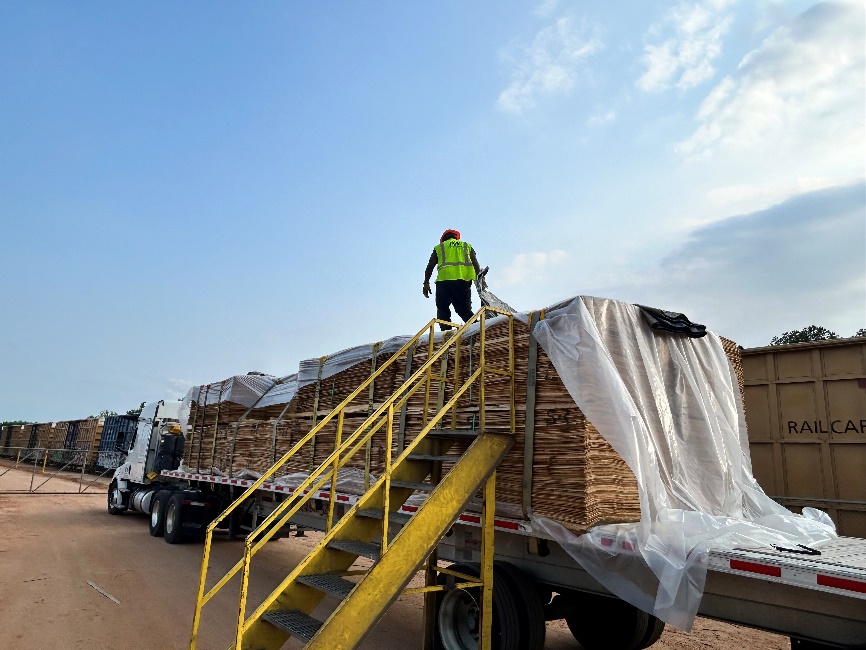
- Extra caution should be observed while on top of the load. The middle layer may be one stack as opposed to two stacks.
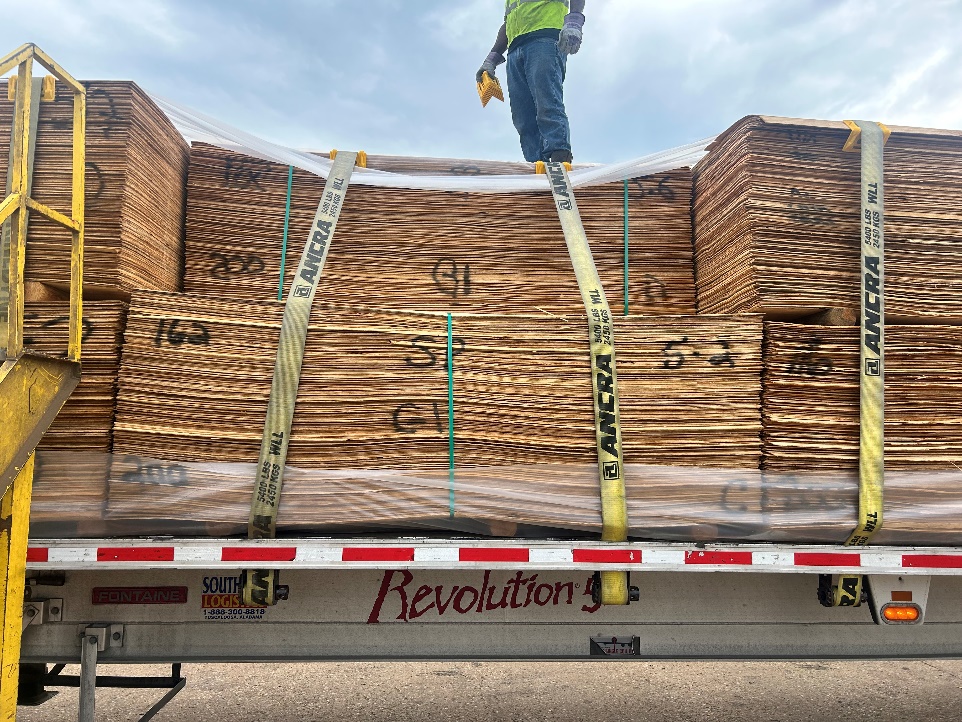
- Load to be tarped and tarp straps should be used to hold in place while transporting.
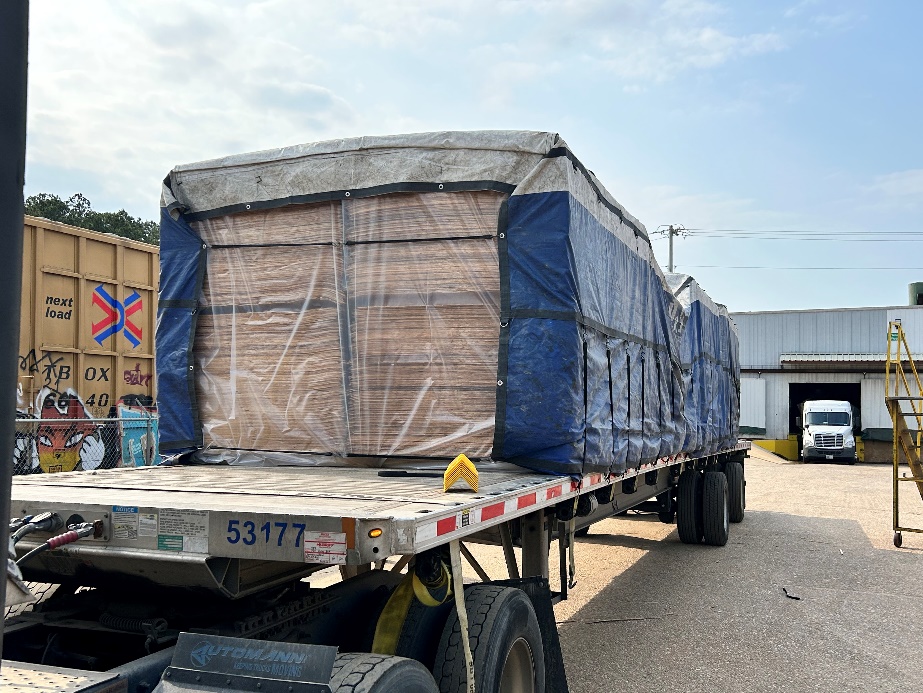
- Front and Rear should be cross strapped to help control any load shifts.
- Note: Cross straps can be applied under or over tarps.


- Load should be tightened as much as possible.
- Damaging the product because of over tightening is not a concern.
- Load check should occur within first 50 miles.
- Additional load checks should occur with each additional 150 miles or 3 hours; whichever comes first.
This Product is difficult to keep tight.
Frequent load checks and tightening of the load can help prevent shifts and potential claims.